秀米
Stockholm to ban gasoline and diesel cars from downtown commercial area in 2025_我的网站

A |

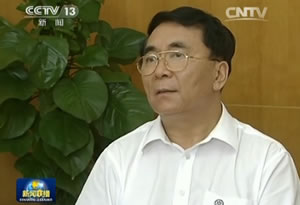
Tian Xuan Photo: Courtesy of Tian
In economic theory, "overcapacity" - for which no universally accepted definition exists - is inherently a recurring feature of the market economy's dynamic "balance - imbalance - rebalance" cycle. The Western narrative that equates China's sizable production capacity directly with "overcapacity" defies economic logic and rigor; in reality, it represents a politicization of trade and economic issues.
First, it confuses the concepts of "capacity scale" and "overcapacity." China's overall industrial capacity utilization remains within a reasonable range. Periodically lower utilization in traditional sectors reflects a normal adjustment as these industries advance toward high-end, intelligent, and green production. Ample capacity in certain emerging industries is precisely what meets surging global demand for high-end, smart, and green solutions. Therefore, equating scale with excess is typical equivocation.
Second, "overcapacity" itself is a dynamic feature of market economies, where no fixed balance persists indefinitely. Judging capacity based solely on static snapshots violates basic economic principles.
Third, it is erroneous to simplistically link trade surpluses or industrial subsidies to overcapacity, while ignoring the macro context of global specialization and cross-border savings-investment structures. It also disregards the reality that reasonable capacity utilization ranges differ across economies at varying stages of development. Imposing a single standard on China is neither scientific nor rigorous.
China's global competitiveness in green technology stems from sustained, large-scale investment in innovation, a comprehensive industrial and supply chain system, massive application scenarios, and intense market competition - not from alleged government subsidies. After decades of long-cycle R&D, Chinese industries have achieved breakthroughs in core technologies such as power batteries and photovoltaic modules.
During the 14th Five-Year Plan period (2021-25), China's nationwide R&D spending grew at an average annual rate of 10 percent. Economies of scale have continuously diluted production costs. China's ultra-large domestic market and full-chain supporting ecosystem provide an optimal testing ground for new technologies - from pilot verification to mass deployment. With more than 200 million market entities driving fierce competition, enterprises are constantly compelled to cut costs, raise efficiency, and upgrade products, thereby forging dual advantages in price and performance that we see today.
There is no direct causation between subsidies and overcapacity. Industrial subsidies are a globally recognized practice, typically aimed at correcting market failures and advancing critical technologies. China's subsidies are granted on an impartial basis to all types of market entities, in full compliance with WTO rules, and have not triggered disorderly capacity expansion.
Currently, capacity utilization in China's green industries remains within a reasonable range. Support is primarily directed toward R&D, technological breakthroughs, and consumer-side incentives through market-based mechanisms - not toward fueling overcapacity. Crucially, China's high-quality capacity has reduced the global cost of green transition, representing an opportunity rather than a shock to world development.
Against the backdrop of global carbon neutrality goals, labeling China's new energy capacity as "overcapacity" is entirely untenable. According to the International Energy Agency, global data center electricity consumption will approach 1 trillion kWh by 2030, with 40 percent of incremental power needing to come from renewables. Demand for wind power, photovoltaics, power batteries, and related green energy solutions remains far from saturated - so claims of "overcapacity" are groundless.
China's capacity plays a central role in advancing the global energy transition. Over the past decade, the levelized cost of electricity from wind and solar globally has fallen by more than 60 percent and 80 percent respectively - improvements largely attributable to Chinese innovation and manufacturing, which have directly lowered the cost threshold for worldwide green transformation.
The US journal Science crowned the global renewable energy surge led by China among its Top 10 Breakthroughs of 2025. Leveraging its technological and scale advantages, China is well positioned to supply abundant, high-quality green energy equipment and solutions, meet fast-growing renewable demand from data centers, industrial production, and other sectors, and tangibly support countries in implementing the Paris Agreement. In short, China is a pivotal force driving the global low-carbon transition.
The so-called "China Shock 2.0" is fundamentally a protectionist narrative rooted in Cold War thinking - a politically motivated claim inconsistent with facts. The rapid development of China's modern industries is driven by innovation and sustained institutional reform, not by dumping allegedly excess capacity abroad. Rather than posing a shock, China's industrial progress offers a "China Opportunity 2.0." It delivers multiple dividends to global development - innovation dividends, market dividends, and growth dividends - while injecting stability and vitality into global industrial chains through an open and win-win approach.
China's high-quality green and high-tech exports have tangibly accelerated the global green transition and reduced production costs worldwide. Meanwhile, as the world's largest goods consumption market and the second-largest importer for 17 consecutive years, China provides enormous market opportunities for economies around the globe. Moreover, China's open-source collaboration and technology sharing in frontier fields such as artificial intelligence and the digital economy enable developing countries to bridge the digital divide at lower cost and share in the benefits of the technological revolution.
The facts demonstrate that China's emerging technologies and products represent a "China Opportunity 2.0" - driving global technological progress, accelerating the green transition, improving livelihoods across nations, and bolstering the industrialization of developing economies. This open and mutually beneficial cooperation stands as the true engine of global economic recovery and sustainable development.
This article is compiled based on an interview with Tian Xuan, dean at the Guanghua School of Management and Boya Distinguished Professor of Finance of Peking University. [email protected]
。

B | STOCKHOLM -- A ban on gasoline and diesel-fueled cars from a commercial district of Stockholm's downtown in 2025 will be the first for a European capital, a city official said Thursday.The ban will take effect in a 20-block area of shops, pedestrian walkways and a few homes in order to curb pollution, reduce noise and encourage use of electric vehicles said Lars Strömgren, the city council member for the Greens who's in charge of the Swedish capital's transportation. Many European capitals have restrictions on gasoline and diesel cars, but Strömgren says Stockholm’s complete ban would be a first. “We need to eliminate the harmful exhaust gases from (gasoline) and diesel cars. That’s why we are introducing the most ambitious low-emission zone to date,” Strömgren told The Associated Press. The idea is to create an "environmental zone” where only electric vehicles will be allowed. There will be some exceptions such as for emergency vehicles and transportation for the disabled.In its budget for 2024, the left-leaning, environmentally-focused city council on Tuesday unveiled the plan for the target area just north of the city’s famed Old Town. The municipal government controls a majority in the council, so the vote set for Nov. 23 is expected to be a formality. “We are pretty proud, I must say,” Strömgren said, adding that gradual expansion of the environmental zone would be decided in the first half of 2025.One of the city’s main cab companies, Taxi Stockholm, said its transition to emission-free vehicles is moving at a fast pace. The company’s acting chief executive Pernilla Samuelsson said it's emission-free vehicles now make up 30% of its fleet - almost seven times more than last year. “In other words, the transition is going fast and it is already being driven forward by the industry,” Samuelson said.Some aren't convinced things will go smoothly. Nike Örbrink from the opposition Christian Democrats told the Aftonbladet newspaper that some are concerned the plan would hurt businesses and the hotel industry.Other European capitals harbor similar ambitions. The Dutch capital, Amsterdam, is aiming for all transport in the city, including automobiles, to be emissions-free by 2030.The mayor of Paris wanted to ban all diesel cars before next year’s Olympics, and gasoline cars by 2030, but has run up against resistance.Currently, any diesel cars built before 2006 and gasoline cars built before 1997 are banned in Paris and 77 surrounding towns for 12 hours a day on weekdays. The ban will expand in 2025 for diesel cars built before 2011 and pre-2006 gasoline vehicles.___Jan Olsen reported from Copenhagen, Denmark. AP writers Mike Corder in Amsterdam, The Netherlands and Angela Charlton in Paris, France contributed.。
Current article:http://www.yuejinhuapennuochoudengying.cyou/z5v4nf9/20260826/734585.doc
Published on:17:19:41