伪娘
书名:开学第一课|作者:笑无语|本书类别:古言|更新时间:10:21:54|字数:3896字
A |
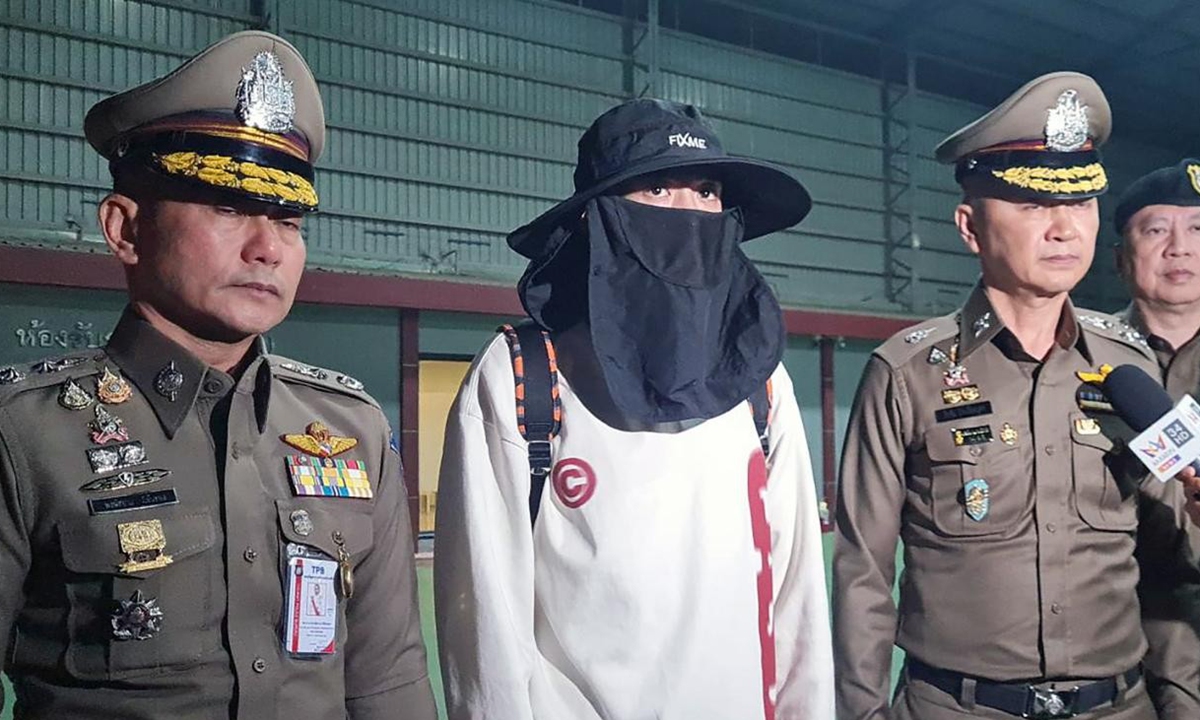
Seventeen members of a cross-border human trafficking ring involved in abducting Chinese actor Wang Xing to Myawaddy have been indicted on charges including abducting and trafficking people, illegal detention, robbery and kidnapping, and forcing people to engage in telecom fraud, according to CCTV News on Wednesday.
The indictment was filed by the Second Branch of the People's Procuratorate of Shanghai Municipality after a review in accordance with China's laws. The suspects were prosecuted at the Shanghai No.2 Intermediate People's Court.
According to the procuratorate, the criminal group had been operating in the Myawaddy region of Myanmar. Using overseas employment opportunities as bait, the group lured Chinese citizens, including Wang, abroad and trafficked them. Victims were then forcibly transported by armed personnel to Myawaddy, where they were robbed, beaten and illegally detained. Some female victims were subjected to sexual assault and forced prostitution, while others were sold to scam compounds in Myanmar and forced to engage in telecom fraud activities.
The case involving Chinese actor Wang Xing, who was trafficked to a telecom fraud compound in Myanmar's Myawaddy region, previously attracted widespread public attention in China and Thailand.
According to a timeline compiled by CCTV News, on December 29, 2024, Wang saw a casting notice in a WeChat group seeking actors for a film project in Bangkok. He contacted a person claiming to be an assistant director through WeChat and discussed the filming opportunity.
On January 3, 2025, after arriving at Bangkok airport, Wang was picked up in a vehicle arranged by the self-proclaimed assistant director. Wang was later taken across the Thailand-Myanmar border area into a compound in Myawaddy, Myanmar. He was subsequently transferred among several telecom fraud compounds.
On the evening of January 5, social media post revealed that actor Wang had gone missing near the Thailand-Myanmar border, sparking widespread attention in both countries.
On January 6, the Chinese Consulate General in Chiang Mai said it was in close communication with Thai authorities and Wang's family, providing necessary assistance while making every effort to locate him.
On January 7, the consulate general said it had learned from Thailand's Tak Immigration Office that Wang had been found and that relevant procedures, including questioning, were underway. The same day, Thai police received a report from the deputy commander of the Border Guard Force (BGF) in Myanmar confirming that Wang had been located.
On January 8, Thai police confirmed that Wang had been deceived into traveling abroad for a casting opportunity and was taken through Thailand to a neighboring country, where he discovered he had been deceived.
Authorities clarified that he had not suffered physical injuries, dismissing online rumors that he had been injured in the leg. The Royal Thai National Police chief inspector-general told Thai media that preliminary investigations confirmed Wang was a victim of human trafficking.
Wang returned to China, landing at Shanghai Pudong International Airport three days later on January 11.
On January 17, China's Ministry of Public Security announced that it was making every effort to rescue Chinese citizens who had gone missing and become trapped along the Thailand-Myanmar border, while launching investigations into related cases.
On January 26, the ministry said a key suspect in Wang's case, the "assistant director" who had been in contact with Wang, had been apprehended and returned to China on the night of January 25.
On February 20, the Ministry of Public Security announced that 10 key suspects linked to cases involving Wang and other Chinese citizens who had been deceived into traveling abroad, detained illegally and trapped in telecom fraud compounds had been arrested by Thai police and successfully transferred back to China by Chinese police on February 15.
Global Times
。 (ECNS) -- A satellite launch mission using a modified Long March-7 carrier rocket failed on Monday in south China's Hainan Province, according to China Aerospace Science and Technology Corp. The rocket carrying the Zhongxing-4B satellite blasted off at 8:02 p.m. (Beijing Time) from the Wenchang Spacecraft Launch Site in Hainan, but an anomaly occurred during its flight. Zhongxing-4B is a communications satellite in China's Zhongxing series, designed for television broadcasting and data transmission. The Long March 7A rocket model has a liftoff weight of 573 metric tons and a core-stage diameter of 3.35 meters, capable of placing a 7-ton spacecraft to geosynchronous transfer orbit. The cause of the failure is under investigation, according to the launch site.

 。
。


