新视觉
美国发起对伊朗“经济孤立”新一轮制裁措施 中方:经济战无助于解决问题_我的网站

一 | 中新网北京8月25日电 (记者 张蔚然)中国外交部发言人林剑25日主持例行记者会。 据报道,美国财政部长贝森特当地时间24日宣布,美国当日发起对伊朗“经济孤立”的新一轮制裁措施,旨在切断伊朗政府每条经济生命线,直至其完全孤立。
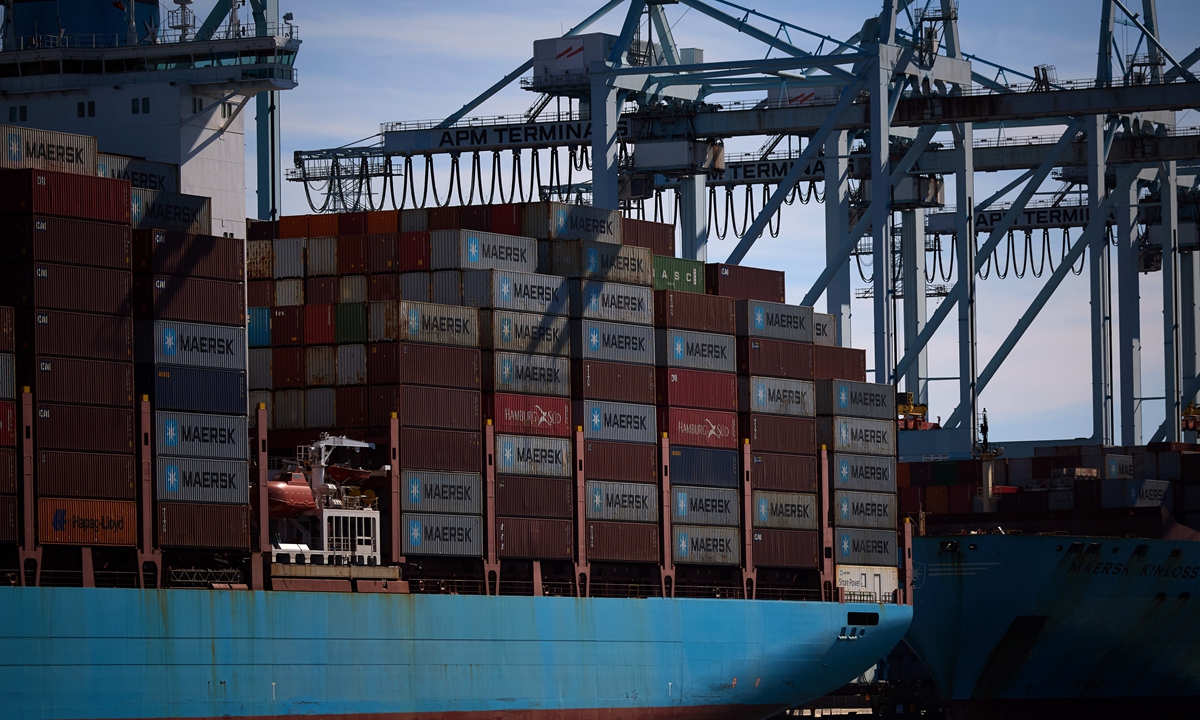
When even major US allies and trading partners are swept into Washington's alleged China-linked transshipment network, is the US still cracking down on its so-called illegal tariff evasion, or is it raising its "small yard, high fence" higher and tighten it further by wielding its tariff stick and extending tariff controls across normal global supply chains?
The White House on Thursday released a report identifying roughly 40 economies as participants in what it calls a "Shadow Transshipment Network", alleging that Chinese goods are being routed through third countries to evade higher US tariffs. The list stretches across Asia, Europe and the Americas and includes some of Washington's closest allies and largest trading partners.
Chinese experts said the report is partly aimed at defending Washington's tariff policy by shifting responsibility for its weakened impact onto other economies, while also pressuring them to follow US trade and origin rules. In effect, the US is trying to extend its unilateral trade restrictions beyond its own borders and deeper into global supply chains, they said.
Build 'higher fence'
The 25-page report claims that US import sourcing saw a "substantial reallocation" after the 2018 tariffs, as China's direct share declined and imports from identified transshipment economies rose. It alleges that some goods were routed through lower-tariff jurisdictions, where minor processing, relabeling, repackaging, re-invoicing or paperwork changes were used to create the appearance of a new national origin.
However, the report itself acknowledges that alleged transshipment risks in several major economies are "embedded within broad legitimate trade flows." It also admitted that the post-2018 shift in US imports "does not establish" that all displaced Chinese trade was illegally transshipped and partly reflected "legitimate changes in production, investment, and sourcing."
False declarations of origin or simple repackaging can amount to tariff circumvention, but investing overseas, building factories abroad or sourcing components across borders are legitimate forms of supply-chain adjustment, experts said.
One purpose of the report is to portray Washington's tariff policy as effective while attributing its diminished impact to the responses of other economies, Zhou Mi, a researcher at the Chinese Academy of International Trade and Economic Cooperation, told the Global Times.
This allows Washington to shift responsibility onto other economies and put itself in a more favorable position in shaping the narrative around its tariff policy, Zhou said.
Cui Fan, a professor at the University of International Business and Economics, told the Global Times that US rules for determining country of origin are not fully aligned with those used by other economies. The latest move could pressure other countries to adopt US standards, but Cui said such an approach is unlikely to work.
"Countries formulate their rules of origin based on a range of factors, including the scale and technological conditions of their own industries," Cui said. "Industrial structures and the global division of labor cannot be reshaped simply through pressure from one country."
Harmonization of rules of origin - applying the same rules across countries regardless of purpose - "would facilitate the flow of international trade," according to WTO on its website.
It has also warned that misuse of such rules may turn them into "a trade policy instrument" rather than merely a device supporting other trade policy measures, according to WTO.
Washington was pursuing hegemonic politics and unilateral bullying in the economic and trade sphere under the guise of "reciprocity", a spokesperson for China's Ministry of Commerce said when commenting on the US use of tariffs to pressure other countries into restricting economic and trade cooperation with China.
Disrupting global supply chains
Cui said production and trade networks linking China with South Korea, Europe and other economies have taken shape over years of market-driven specialization. By lowering production and logistics costs and improving efficiency, these networks have benefited businesses and consumers across participating economies.
"The real challenge facing global trade today is not so-called illegal transshipment, but the continued damage that unilateralism and trade protectionism are inflicting on the multilateral trading system," Cui added.
Since returning to office, the Trump administration has made tariffs a centerpiece of its trade policy, rolling out sweeping "reciprocal tariffs" and other broad duties that have drawn widespread criticism at home and abroad. On Thursday, Washington announced new Section 232 tariffs on drones and their parts and components, further expanding the range of products subject to US tariffs.
US tariffs have themselves pushed companies to reconfigure supply chains. Washington is now citing those very adjustments as evidence of circumvention, effectively using the market fallout from its own tariff policy to justify further trade restrictions, Chinese experts noted.
International trade is based on mutual benefit, and sovereign countries have the legitimate right to conduct economic and trade cooperation independently, Cui said. "No country should interfere with normal global trade simply to advance its own unilateral interests."
The report broadens its scrutiny beyond routing and documentation to include China-origin inputs or components, Chinese ownership or financing, relationships with Chinese suppliers or manufacturers, China-based production steps and China-origin routing histories.
Analysts believed the latest move is more than simply making the existing "high fence" higher. By trying to bring more economies and a larger portion of global supply chains within the reach of US tariff enforcement, Washington attempted to make the "yard" itself much bigger.
Cui warned that sustained US pressure to reshape normal trade and supply-chain links could fragment mature regional production networks, and reduce the efficiency of global resource allocation, with the impact extending far beyond China-US trade given the wide range of economies named in the report.
Zhou noted that companies would be forced to redesign supply chains to manage rising policy risks, adding costs that could feed back into the US through higher inflation while creating broader frictions and instability for global trade.
。当日有记者就此提问。

二 | 林剑:中方坚决反对没有国际法依据、未经联合国安理会授权的非法单边制裁。

三 | 经济战、极限施压无助于解决问题,只会进一步激化矛盾冲突,造成风险外溢,扰乱全球的经济金融秩序,损害他国正当权益。 当务之急是推动局势降温,尽快回归对话谈判轨道。中方将采取一切必要措施,坚定维护自身权益。(完) 【编辑:胡寒笑】。

四 |
Current article:http://www.yuejinhuapennuochoudengying.cyou/news/20260826_9685508.ppt
Published on:19:48:21


