
死亡飞车
Epic 反对苹果申请封存诉讼材料:外部购买佣金核心数据应当公开_我的网站

一 | 8 月 25 日消息,Epic 表示,苹果提出了过于宽泛的封存请求,试图对其认为与确定公司可向开发者收取“关联外购”费用至关重要的信息进行保密。
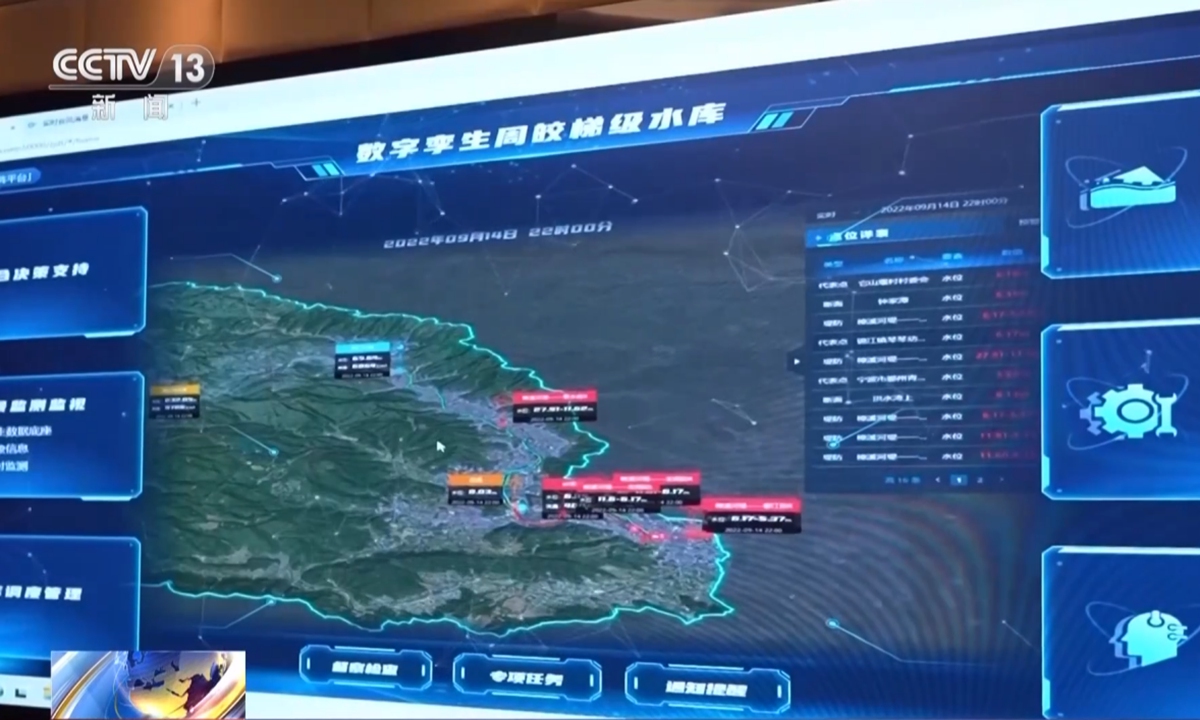
From AI-powered flood forecasting and digital twins to smart reservoir management, phased-array radar networks and ground-based remote sensing systems, a new generation of high-tech equipment and systems is helping Chinese cities sharpen weather forecasts, improve flood control and make faster, more precise decisions to stay one step ahead of extreme weather.
In Ningbo, East China's Zhejiang Province, where water resources are relatively limited, the calculation of reservoir water release is tricky. If you release too much, the city could find itself short of water after the storm, however if you release too little, the reservoir may struggle to accommodate the floodwater brought by torrential rain.
Finding that balance is now increasingly a job for AI.
"The balance point has to be continuously analyzed and calculated by the dispatching software," Jiang Yutian, a department director at the Ningbo Water Conservancy & Hydropower Planning and Design Institute Co., Ltd., said, according to CCTV News.
At the heart of the system is an AI forecasting model that dramatically speeds up calculations.
For the Yongjiang River basin, running a complete flood-control scenario used to take five to 10 minutes. The new model can complete the calculation in just five to 10 seconds, cutting the time required to around one-sixtieth of the previous level.
Using rainfall forecasts and changing water levels, the model refreshes its recommendations every five minutes, calculating how much water should be released, how much can be stored later and how much reservoir capacity will remain when the flood peak arrives. Dispatchers can then adjust water releases in real time, per CCTV's report.
AI is not working alone. A digital-twin dispatching platform allows reservoirs to be managed together rather than individually. Across Ningbo's 16 major medium- and large-sized flood-control reservoirs, operators can see in real time which are approaching capacity and which still have room to take more water.
Hundreds of kilometers inland, another city is using a different technological set of technologies to tackle the same challenge of weather uncertainty.
Nanyang in Central China's Henan Province, which lies in a basin surrounded by mountains on three sides, has experienced widespread heavy rainfall since Monday under the influence of Typhoon Dolphin. Its geography leaves the city exposed to a combination of risks, including urban waterlogging, flooding in small and medium-sized rivers and inundation of farmland.
To track storms more precisely, the Nanyang meteorological authority has deployed a network of four newly installed X-band dual-polarization phased-array radars, together with an S-band dual-polarization radar and a ground-based vertical remote sensing system, according to the China Meteorological Administration.
The equipment allows forecasters to closely track the development and movement of convective clouds and identify areas at risk of intense rainfall earlier.
The city's meteorological authority has also integrated weather data with a citywide video monitoring network covering vulnerable locations such as underpasses, tunnels, river embankments and mountainous villages. This allows forecasters to compare what instruments are detecting with what is actually happening on the ground.
Together, the approaches in Ningbo and Nanyang offer a glimpse of how China's weather-disaster prevention efforts are becoming increasingly digital and intelligent, using faster calculations, denser observations and real-time data to bring greater certainty to decisions made in the face of uncertain weather.
Global Times
。Epic 称苹果试图“向公众隐瞒信息”几天前,苹果提交了其提案,概述了其认为应被允许就通过外部链接在 App Store 之外完成的购买收取多少佣金。苹果的提案要求:标准应用收取 15%,此类应用需缴纳 30% 的应用内购买(“IAP”)佣金;视频合作伙伴计划(“VPP”)、新闻合作伙伴计划(“NPP”)、小程序合作伙伴计划(“MPP”)以及订阅续费收取 10%;小型企业计划应用收取 5%。注意到,除提案本身外,苹果还提交了支持性专家报告,同时提出了一项封存申请,要求对提交材料中包含财务数据、链接外购采用率估算、开发者调查结果以及其他苹果认为具有商业敏感性的信息部分进行保密。Epic 现已对苹果的申请提出反对意见,称“苹果再次试图向公众隐瞒信息,并毫无必要地阻碍诉讼程序”。据 Epic 称,苹果未能充分说明为何其提交材料及支持性专家报告的部分内容应保持封存或进行删节。Epic 认为,将法庭记录置于公众视野之外有着很高的门槛,尤其是当相关信息对于确定苹果拟议的佣金费率至关重要时。该公司援引了过去法院因未能证明具体损害而驳回封存申请的案例。其中,它指出法院曾裁定,“未经具体事例或明确论证支持的笼统损害指控”以及“平淡而笼统的理由”不足以证明向公众隐瞒信息是正当的。Epic 还表示,苹果想要封存的某些信息已经过时,而其他部分则是公开可获取的。Epic 尤其反对苹果试图封存显示自法院发布藐视法庭令、强制其允许开发者将用户引导至外部购买选项以来,应用采用外部购买链接比率的数据。摘自该文件:苹果一再试图封存其对开发者链接外购采用率的评估。例如,苹果试图删节其声称自法院发布藐视法庭令以来,按规模划分的已采用链接外购的应用百分比。(……)这些信息对这些诉讼程序很重要,而且无论如何都不具有竞争敏感性,因此不应被封存。Epic 在反对文件的结尾请求法院驳回苹果的部分封存申请,并指向一份单独的 19 页附件,其中 Epic 对苹果提交材料及支持性专家报告中 60 多处拟议删节内容提出了全部或部分异议。

二 |
Current article:http://www.yuejinhuapennuochoudengying.cyou/list_p0h/kwgp.ppt
Published on:14:51:37
最新文章
- 消息称苹果北京时间 9 月 9 日召开 iPhone 18 Pro / Max 发布会
- 【品种策略】橡胶:08月26日多家期货公司晨报观点汇总
- 福建省人工智能创新发展交流活动在榕举办 四项产业合作计划启动
- 日本本州岛5.8级地震已致多人受伤,截至当地时间23日3时,已接到约30起与地震有关的报警
- Human Made要IPO了
- 基于SPA3 EV平台打造/2026年年初上市 沃尔沃EX60预告图发布
- 《福建省“十五五”县域重点产业链群高质量发展行动方案》出台
- 网飞官宣新片马上播!《GTA6》直播后谁还看泄露?
- 宏观政策发力提效
- gamescom 2026:全球最大游戏盛会观看指南及每日日程安排
标签云
热门文章