
萌学园
争取“十五五”期间新建3个国字号产业基地_我的网站

A |
Cosplayers in brightly colored power armor, carrying replica weapons, posed in front of displays featuring quotations and insignia from Warhammer 40,000, which is regarded as one of the world's best-known miniature wargames. Fans gathered around them for photos, creating the atmosphere of a franchise meet-up.
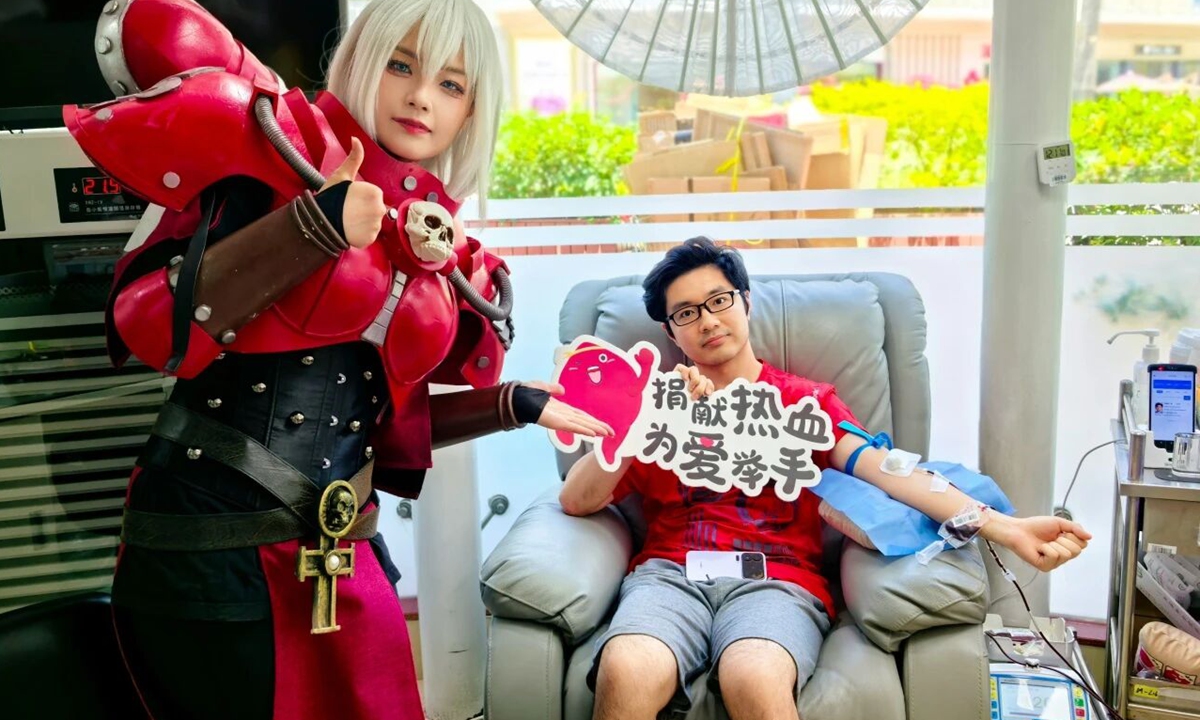
But the visitors had not come simply to meet fellow enthusiasts. Many had traveled from across China to roll up their sleeves and donate blood, drawn by the chance to take home a Warhammer-themed model.
The unlikely crossover reflects a broader effort by Chinese blood centers and public welfare organizations to reach young people in a language they recognize. By collaborating with popular international and domestic franchises, these organizations are making traditionally solemn causes more accessible - and, in this case, turning online enthusiasm into first-time blood donations.
Toys for life
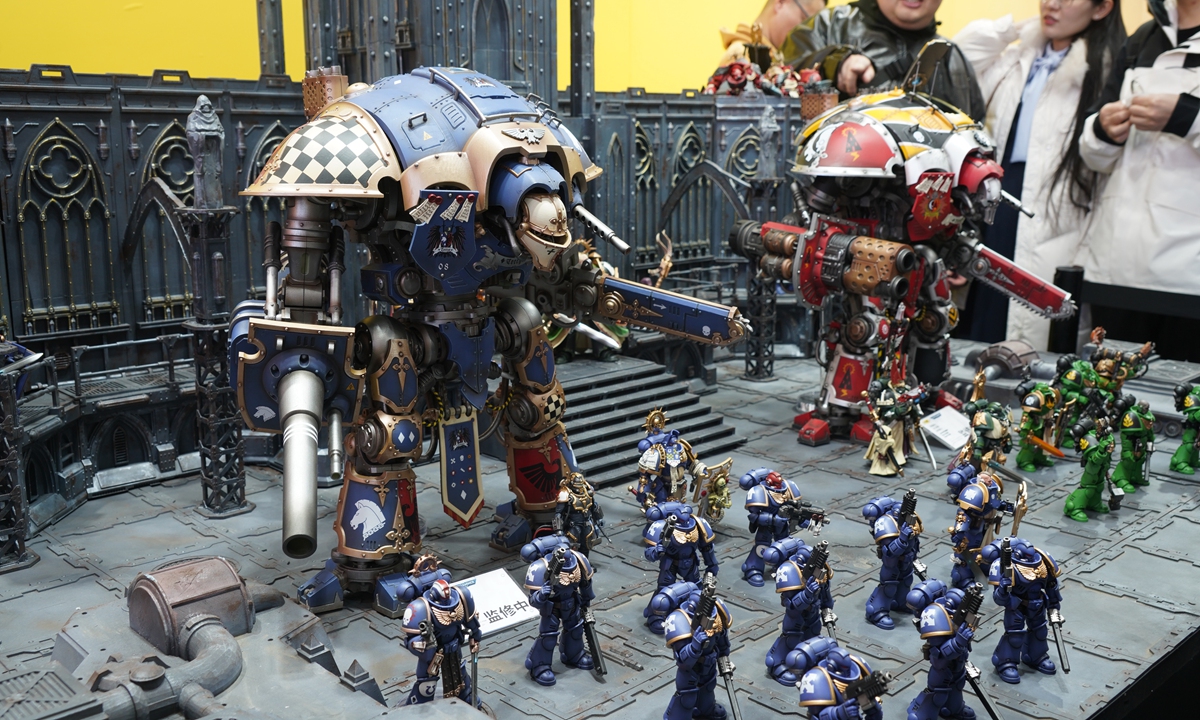
From July 24 to August 2, the Shanghai Blood Center held a campaign allowing people who donated whole blood at designated sites to enter a prize draw for Warhammer 40,000-themed figures and models.
The prizes ranged from giant 1:18-scale Knight Titans - towering war machines in the franchise's fictional universe - and Primarchs, its superhuman military leaders, to standard Space Marine figures.
At three designated blood donation sites, the combined number of donors reached 256 in a single day, said the center.
The response was particularly notable because Shanghai had experienced consecutive days of high temperatures, which reduced pedestrian traffic and affected street-based blood collection.
With some models distributed faster than expected, the center held another round of the campaign on August 8 and 9.
The campaign appears to have reached the audience it was designed to attract. Zhu, 25, who donated blood in Shanghai on August 1, told the Global Times that his interest in Warhammer was the main reason he joined the campaign.
"I had never donated blood before taking part in this event," Zhu said.
Zhu lives outside Shanghai, as did many participants he met at the site. Some had traveled from the neighboring provinces, while others came from even farther away, largely because of the Warhammer models.
"Close to half of the donors on site that day were giving blood for the first time, and they were also Warhammer fans," Zhu said.
The campaign was neither an isolated experiment nor the center's first attempt to use pop culture to engage potential donors. According to the Xinhua News Agency, the Shanghai Blood Center began exploring IP collaborations in 2014 and has more than a decade of experience in such campaigns.
Pop culture for public good
China's voluntary blood donation rate has reached 11.4 donors per 1,000 people, Gao Guangming, deputy head of the Department of Medical Emergency Response under the National Health Commission, said at a press conference in June 2025.
"Over the past two years, voluntary blood donations have declined globally due to multiple factors. In China, the accelerating aging of the population, changes in lifestyles, and overlapping challenges in publicity, organization and mobilization have left the imbalance between blood supply and demand relatively pronounced," Gao said.
"Clinical demand continues to rise, while seasonal, regional and blood-type-specific shortages persist," Gao said.
As people aged 35 and under constitute the majority of blood donors, attracting more young people is crucial to sustaining voluntary blood donation.
"Using designer toys and popular products can make blood donation more approachable, increase its visibility and recognition among young people, and help remove psychological barriers," Zhang Yiwu, a professor at Peking University with an expertise in cultural studies, told the Global Times on Wednesday.
Young people are highly active on social media and more willing to share their experiences, meaning their participation can encourage others to follow, Zhang said. Attracting younger generations is therefore essential to the long-term development of public welfare causes, he noted.
Blood donation is not the only field in which Chinese organizations are using popular franchises to broaden public participation.
In March, One Foundation again collaborated with Twinkle Twinkle, a popular character owned by Chinese toy company Pop Mart, to raise awareness of the needs of people requiring special support. Volunteers and children with autism took part in an art activity at Pop Mart City Park in Beijing.
The Pokémon franchise also appeared in a ByteDance public welfare campaign in 2025, which called for greater attention to the treatment and rehabilitation of children with cleft lips and palates, according to Chinese media reports.
Yet the campaign's success also raises a longer-term question: whether enthusiasm generated by prizes can be converted into regular voluntary donations.
"If there are more Warhammer-related charity campaigns in the future, fans will continue to follow them with enthusiasm, and I would also consider participating again," Zhu said. "However, without rewards or other incentives, the actual participation rate may not be very high."
A Shanghai Blood Center staff member acknowledged the same challenge. "A themed event can quickly increase the number of blood donors, but the long-term security of a city's blood supply ultimately depends on a stable community of voluntary donors," said the staff member, according to Xinhua.
The lasting value of an IP collaboration, therefore, lies not simply in the immediate increase in donor numbers, but in whether it gives first-time donors a positive reason to return.
"The real significance of IP collaborations is to give young people an opportunity to walk into a blood donation site," Xinhua noted. "Through standardized services and a positive experience, they can develop an understanding of and identification with voluntary blood donation, ultimately moving from 'one-time campaign participants' to 'long-term contributors to public welfare.'"
。 讯 8月19日,中共山西省委宣传部、山西省人民政府新闻办公室举办开局起步“十五五”系列主题新闻发布会(晋中市专场)。

B | 会上,晋中市委常委、副市长,晋中国家农高区党工委书记、管委会主任李哲介绍,晋中坚持走有机旱作与特优农业融合发展之路,重点抓好5项工作。 一是聚焦空间布局,优化资源配置。根据地理气候、产业基础、资源禀赋,构建“两区三带”产业战略布局。

C | 两区,就是平川地区发展规模种养和精深加工,东山地区发展休闲农业和生态种养;三带,就是汾河百里设施蔬菜带、丘陵百里林果经济带、太行山百里“草畜粮”循环产业带。

D | 引导项目跟着产业走、资金跟着产业投、人才技术向产业聚,争取“十五五”期间新建3个国字号产业基地。 二是聚焦科技赋能,发展新质生产力。依托晋中国家农高区28个国省级重点实验室,开展玉米、谷子等良种繁育推广,推进节水农业、丘陵农机等关键技术攻关,发展智慧农业、合成生物产业,发挥农高区科技引擎作用,赋能特优农业发展。 三是聚焦稳粮保供,发展绿色有机农业。

E | 一方面,在资源条件好的区域建设高标准农田,发展现代灌溉农业,推广“一年两作、两年三作”,提升粮食单产,保障粮食安全。另一方面,选树可复制、可推广的先进典型,建设一批绿色、有机农业示范推广基地,生产出真正有机高品质的晋中地理标志性农产品,走向全国、全球高端市场,满足不同层次的消费需求。 四是聚焦精深加工,做好三产融合文章。跳出只卖原粮鲜果的老路,延伸产业链,提升附加值,以精深加工激活特优农业,把得天独厚的土特产资源优势转化为产业优势、经济优势。依托农高区牵引,突破加工技术瓶颈,健全标准体系,做强“农高晋品、太行山货”市级区域公用品牌,培育壮大市场主体,打造加工产业集聚区。“十五五”末,力争国家级龙头企业达到10家以上,农产品加工销售收入突破600亿元。

F | 五是聚焦增产增收,强化惠农服务。建立“产业出题、院校揭榜、农高区中试熟化”机制,推动更多科技成果从实验室走向田间地头,把好技术转化成好收成。

G | 建设“1+N”现代农事综合服务中心,统筹提供“良种、良田、良机、良法”服务,助力农业生产降本增效。开发特优农业+文化、+旅游、+康养等新模式新业态,让农民在家门口就业增收。版权申明:凡注有“”或电头为“”的稿件,均为独家版权所有,未经许可不得转载或镜像;授权转载必须注明来源为“”,并保留“”的电头。

H | 。
Current article:http://www.yuejinhuapennuochoudengying.cyou/list_dn1af/f8fusi.ppt
Published on:16:04:58
 以色列代表称若联合国同意巴勒斯坦成正式会员国,美国将停止资助联合国及其机构,如何评价?
 喝点水,尿就多,这是提示肾好?还是肾虚呢?今天一次讲清楚
 太给国产长脸!中国军工埃及现场带货,埃及空军直呼大开眼界,豆莱说,原创 太给国产长脸!中国军工埃及现场带货,埃及空军直呼大开眼界
 短时暴雨!7~9级雷雨大风!杭州的雨还要持续
 调解纠纷、吃饭休息都可以一站式解决 全国首家滴滴司机服务授权旗舰店启用