海派甜心
China opens exhibition to preserve, bring linguistic diversity to life_我的网站

A |

A visitor listens to dialects of various regions in Hunan at the Exhibition Hall of the Project for the Protection of Language Resources of China in Changsha, central China's Hunan Province, Aug. 24, 2026. A new exhibition hall dedicated to the preservation of China's diverse language resources opened on Monday in Changsha, capital of central China's Hunan Province, bringing a decade-long effort to document languages and dialects to the public through digital and interactive displays. The Exhibition Hall of the Project for the Protection of Language Resources of China, located in the Hunan Museum, brings together recordings and other language materials collected from more than 1,800 field survey sites across China, covering Chinese dialects, ethnic minority languages and related cultural traditions. (Xinhua/Xue Yuge)Putting on headphones at a new exhibition hall in central China, visitors can hear a chorus of voices from across the country, including regional dialects, traditional songs in ethnic minority languages and field recordings of languages on the verge of extinction.
The Exhibition Hall of the Project for the Protection of Language Resources of China opened Monday in Changsha, capital of central China's Hunan Province, bringing decade-long efforts to document languages and dialects to the public through digital and interactive displays.
Located in the Hunan Museum, the exhibition brings together recordings and other language materials collected from more than 1,800 field survey sites across China. More than 30 language-related cultural relics are also on display.
The recordings represent 10 major Chinese dialects and more than 100 ethnic minority languages, including Mongolian, Tibetan, Uygur and Zhuang, said Chen Xuliang, deputy Party secretary of the Hunan Museum.
"Digital technology is helping bring the results of language preservation research out of databases and into public cultural spaces," he said.
The exhibition draws on materials collected through a national language preservation project launched in 2015 to document and preserve the country's diverse languages and dialects. It is the world's largest project of its kind, according to experts.
Over the past decade, researchers have traveled to remote mountain villages and pastoral areas to find native speakers of different ages. They systematically recorded words, grammatical examples, oral traditions and other language materials, turning oral memories at risk of disappearing in digital records that can be preserved for generations.
The work has become increasingly urgent as the number of native speakers of some languages declines.
China is home to more than 100 languages and numerous dialects. Some languages, including Hezhen and Manchu, now have fewer than 100 speakers.
Economic integration, population mobility and the social changes they bring are making it increasingly difficult to preserve languages and cultural traditions around the world, said Wang Lining, a professor at Beijing Normal University's School of Chinese Language and Literature and a participant in the language preservation project.
Many languages lack well-developed writing systems, Wang said, meaning knowledge and memories passed down orally can be lost when their speakers die.
The new exhibition aims to bring such preservation work closer to the public. It also promotes the principles of the "Yuelu Proclamation," which was officially released in 2019 and described as UNESCO's first permanent document themed on the protection of linguistic diversity.
Experts attending the exhibition's opening said a key challenge is how to use artificial intelligence and digital museum technologies to turn vast collections of field recordings into cultural experiences the public can engage with.
For Wang, documenting endangered languages is only the beginning.
"In the past, the focus was on recording endangered languages and preserving samples of their voices," she said. "In the future, preservation needs to move toward keeping languages alive."
The exhibition hall, Wang said, is part of that shift, taking language resources beyond academic research and bringing them closer to everyday life.

People visit the Exhibition Hall of the Project for the Protection of Language Resources of China in Changsha, central China's Hunan Province, Aug. 24, 2026. A new exhibition hall dedicated to the preservation of China's diverse language resources opened on Monday in Changsha, capital of central China's Hunan Province, bringing a decade-long effort to document languages and dialects to the public through digital and interactive displays. The Exhibition Hall of the Project for the Protection of Language Resources of China, located in the Hunan Museum, brings together recordings and other language materials collected from more than 1,800 field survey sites across China, covering Chinese dialects, ethnic minority languages and related cultural traditions. (Xinhua/Xue Yuge)
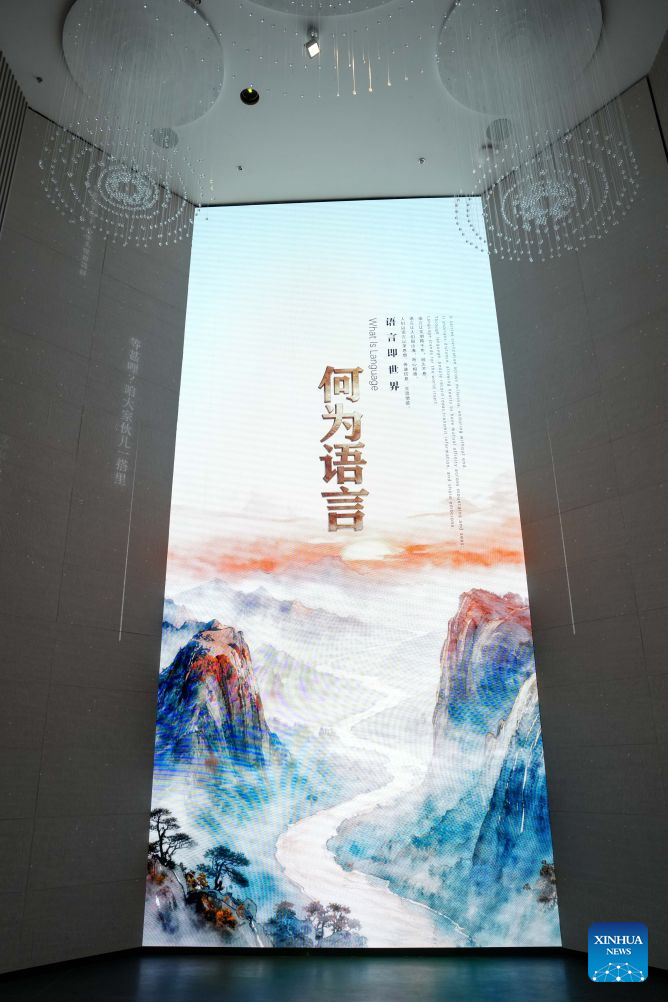
This photo taken on Aug. 24, 2026 shows an interior view of the Exhibition Hall of the Project for the Protection of Language Resources of China in Changsha, central China's Hunan Province. A new exhibition hall dedicated to the preservation of China's diverse language resources opened on Monday in Changsha, capital of central China's Hunan Province, bringing a decade-long effort to document languages and dialects to the public through digital and interactive displays. The Exhibition Hall of the Project for the Protection of Language Resources of China, located in the Hunan Museum, brings together recordings and other language materials collected from more than 1,800 field survey sites across China, covering Chinese dialects, ethnic minority languages and related cultural traditions. (Xinhua/Xue Yuge)
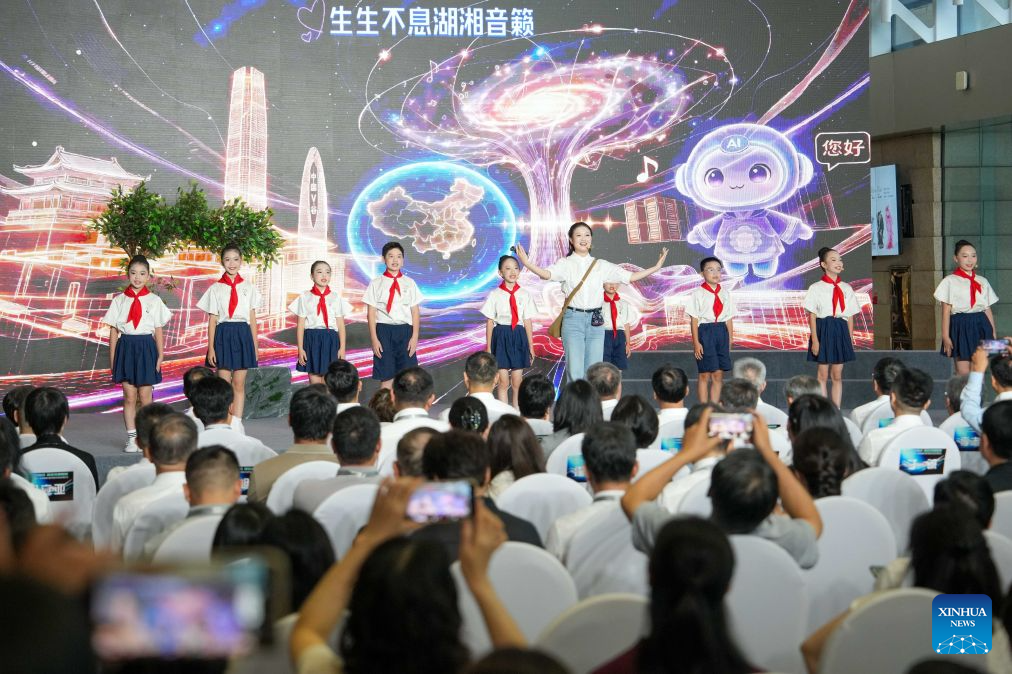
Children perform at the opening ceremony of the Exhibition Hall of the Project for the Protection of Language Resources of China in Changsha, central China's Hunan Province, Aug. 24, 2026. A new exhibition hall dedicated to the preservation of China's diverse language resources opened on Monday in Changsha, capital of central China's Hunan Province, bringing a decade-long effort to document languages and dialects to the public through digital and interactive displays. The Exhibition Hall of the Project for the Protection of Language Resources of China, located in the Hunan Museum, brings together recordings and other language materials collected from more than 1,800 field survey sites across China, covering Chinese dialects, ethnic minority languages and related cultural traditions. (Xinhua/Xue Yuge)
。

微软员工今年不仅在比较薪资,还开始比较自己用了多少AI。 根据泄露的一份微软内部的电子表格,数百名员工自愿匿名披露了自己的加薪、奖金和股票奖励,同时还记录了过去一个月使用AI工具的开销。 目前,微软正向员工提供一款内部工具,用于追踪他们的AI使用情况和相关支出。微软发言人表示,这款AI使用追踪工具目前仍处于早期测试阶段。

B | 当前,微软正加速追赶Meta、谷歌、OpenAI、Anthropic等竞争对手,大力开发AI产品,公司在AI基础设施上投入数千亿美元,并推动员工将AI融入日常工作。 与往年相比,今年的电子表格新增了一栏,要求员工通过内部工具自行填写“每月AI使用金额”(AI $ Usage Per Month)。 这份电子表格泄露时,表格上共有近600名微软美国员工的记录,内容包括员工自称今年获得的基本薪资、加薪、现金奖金和股票奖励等。

C | 当时,其中约350人已经填写了自己的AI使用金额。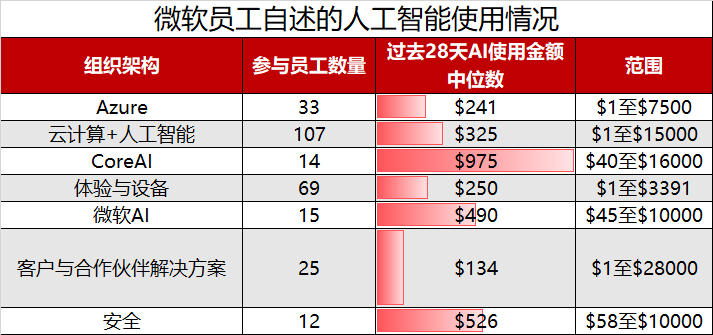 微软员工通常会自愿、匿名分享这些信息,以促进薪酬透明度,但这也意味着相关数据并非官方数据,也不完整。 截至6月30日,微软共有22.3万名员工,因此,这份仅包含约350名员工的表格,只是一个非常有限的样本。 在这些已报告的数据中,过去28天每位员工AI使用金额的中位数约为300美元(约合人民币2016元)。最高纪录来自微软“客户与合作伙伴解决方案部门”的一名员工,达到2.8万美元(约合人民币19万元)。

D | 数据还显示,不同团队之间的AI使用量差异巨大:有些员工每月只花几美元,有些人的使用金额则达到数万美元。 媒体分析发现,在这份电子表格中,员工报告的AI使用金额与其获得的奖励之间并不存在明显关联。 简单来说,更高的AI使用量并未对应更高的奖金评级、更大幅度的绩效加薪,也没有显示出更高的晋升概率。 需要指出的是,微软并非唯一一家试图了解员工如何使用AI的科技巨头。随着各大科技公司投入数十亿美元开发AI模型和基础设施,整个科技行业都在加强对AI使用情况的追踪。 (文章来源:财联社)。

E |
Current article:http://www.yuejinhuapennuochoudengying.cyou/fc7m/8xasb2.html
Published on:00:03:44

 【一线经济观察】河北:以赛引流 以景留客 激活消费新活力
 央行三大流动性工具合力护航月末资金面
 建昌县境内发现一处明清时期辽西古道遗址
 小米林斌:屏幕指纹技术克服一键输入,大规模盲目理解
 把美丽中国建设宏伟蓝图变成美好现实——国新办发布会展望“十五五”美丽中国建设新图景
 从“实验室”到“后厨” 炒菜机器人产业加速发展
 唐师曾逝世:九本书,看一个“行者”的世界,搜狐文化,原创 唐师曾逝世:九本书,看一个“行者”的世界
 Kansas Voters Reject Amendment to Strip Abortion Rights From State Constitution By Nearly 2-1 Margin


