虎牙
German exports to China fall over 12% in H1 as industrial upgrading reshapes trade structure; cooperation remains vital: expert_我的网站

A |
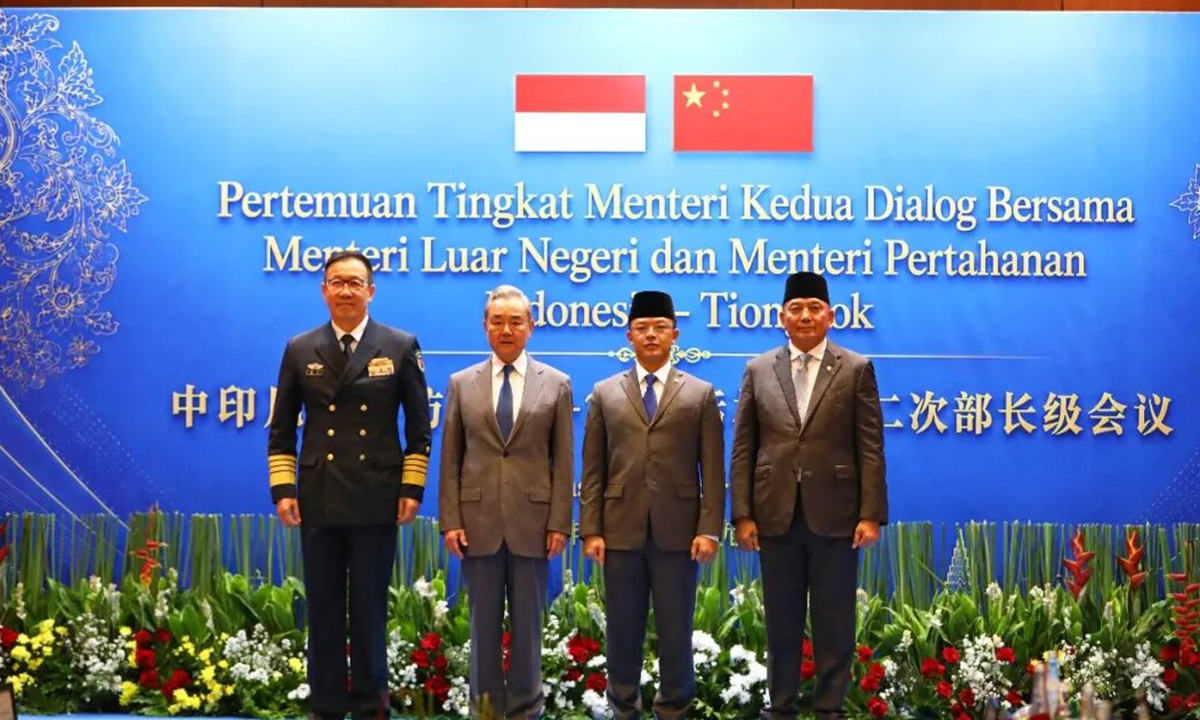
The Second Ministerial Meeting of China-Indonesia Joint Foreign and Defense Ministerial Dialogue Photo: Courtesy of Chinese Foreign Ministry China and Indonesia have agreed to deepen synergy of their development strategies, deepen cooperation across multiple sectors including maritime affairs, and firmly support each other's core interests, during the first Conference of the China-Indonesia Comprehensive Strategic Dialogue Mechanism held on Friday in Jakarta.
Chinese Foreign Minister Wang Yi and Indonesian Foreign Minister Sugiono co-chaired the conference. The two sides had an in-depth exchange of views on advancing the building of a China-Indonesia community with a shared future and reached broad consensus, according to Chinese Foreign Ministry's readout.
Wang said that the establishment of the comprehensive strategic dialogue mechanism is an important initiative for the two sides to implement the consensus reached by the two heads of state and advance the building of a China-Indonesia community with a shared future that enjoys regional and global influence.
Noting that China has always placed Indonesia in an important position in its diplomacy, particularly in neighborhood diplomacy, the Chinese top diplomat said China stands ready to work with Indonesia to strengthen all-round China-Indonesia cooperation, and pool greater development synergy to jointly tackle risks and challenges.
Stressing that the conference marks an important milestone in bilateral relations, Sugiono said China's development has brought enormous opportunities to the world, particularly neighboring countries such as Indonesia.
Sugiono added that Indonesia firmly adheres to the one-China policy and supports China's cause of reunification. Just in mid-August, the Chinese and Indonesian navies held a joint naval navigation exercise in waters east of China's Taiwan island.
The two sides also agreed to uphold strategic autonomy and firmly support each other's core interests. They also decided to launch the formulation of the China-Indonesia Five-year Action Plan (2027-2031).
The dialogue mechanism was established when Sugiono visited Beijing in April 2025.
Following the Conference of the China-Indonesia Comprehensive Strategic Dialogue Mechanism, the two sides also held a "2+2" meeting, pairing foreign and defense ministers in joint dialogue.
During the meeting between Chinese Defense Minister Dong Jun and his counterpart Sjafrie Sjamsoeddin on Friday, the two sides stated that under the strategic guidance of the heads of state of the two countries, the military-to-military relations face favorable development opportunities with broad prospects for cooperation.
Both sides should continue to strengthen military mutual trust, maintain close exchanges between the two militaries at all levels, deepen practical cooperation in multiple fields, and work together to safeguard regional peace and stability.
"Amid rising power politics, hegemonism, and protectionism, the first China-Indonesia Comprehensive Strategic Dialogue Mechanism conference has further enhanced strategic mutual trust and lifted bilateral relations to a new height," said Xu Liping, director of the Center for Southeast Asian Studies at the Chinese Academy of Social Sciences.
At its core, the mechanism does not target any third party; rather, it upholds win-win cooperation, peaceful development, and multilateralism while promoting collective self-strengthening of the Global South, said Xu. "It sets an example for the region and beyond, effectively offsetting extra-regional interference and noise from within and outside the region."
In specific areas, the two sides pledged to expand cooperation in areas such as artificial intelligence and poverty reduction. They agreed to restart cooperation in fishing, accelerate maritime cooperation and push forward joint development.
Both sides agreed that deepening cooperation in energy and mineral resources serves their common interests, and expressed readiness to jointly build a comprehensive, open and green partnership in energy and mineral resources.
Official data shows that China has been Indonesia's largest trading partner for 13 consecutive years, with bilateral trade reaching $167.49 billion in 2025, up 13.4 percent year-on-year. From the Jakarta-Bandung High-Speed Railway to industrial parks and other projects, the two sides have maintained a sound momentum of cooperation.
"As two important Global South countries with highly complementary economies, China and Indonesia have taken the lead in the region in integrating traditional sector cooperation with emerging economic cooperation," said Xu.
He added that Beijing-Jakarta cooperation is characterized by equal emphasis on and deep integration of traditional and new-quality productive forces. "Firmly grounded, multi-dimensional in scope, and rich in substance, it has become a bellwether for regional cooperation," Xu added.
In terms of the regional and global scope, the two sides also agreed to deepen cooperation within the framework of the four major global initiatives, strengthen policy coordination in multilateral mechanisms such as the United Nations and BRICS, oppose unilateral bullying and power politics, and safeguard international fairness and justice as well as the legitimate rights and interests of developing countries.
The two sides agreed to fully and effectively implement the Declaration on the Conduct of Parties in the South China Sea and work toward the early conclusion of the Code of Conduct (COC) in the South China Sea.
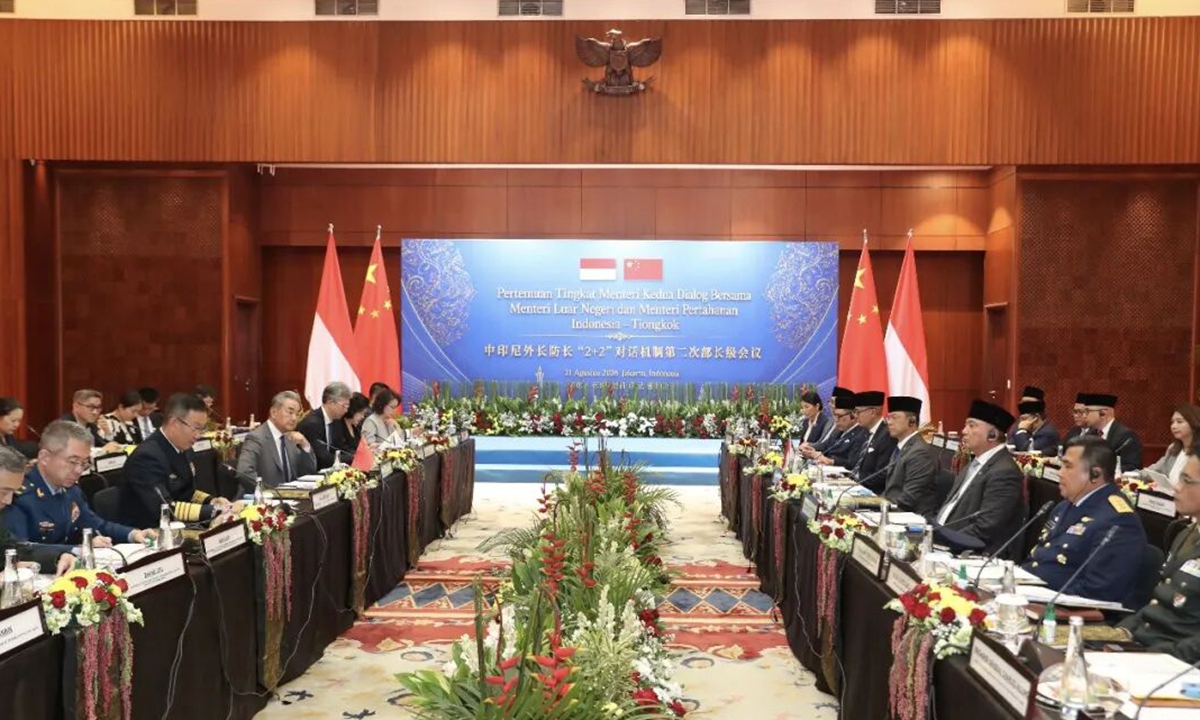
The Second Ministerial Meeting of China-Indonesia Joint Foreign and Defense Ministerial Dialogue Photo: Courtesy of Chinese Foreign Ministry
During the "2+2" meeting, the two sides agreed to deepen defense cooperation and promote the regularization and institutionalization of practical cooperation in areas including equipment and technology, joint exercises and training, personnel training, and maritime security, while continuously improving the quality and effectiveness of such cooperation, according to a readout released by the Chinese Foreign Ministry.
The two sides jointly advocate an Asian security model featuring shared security, and will work to uphold the mainstream of regional cooperation and peace and stability in the South China Sea, the readout said.
Amid attempts by certain countries to create trouble and fabricate confrontational false narratives in the South China Sea, China and Indonesia, both important South China Sea littoral states, are duty-bound to jointly safeguard regional peace and stability, said Xu. "Their consensus on this issue injects positive energy into the region, contributing to the early conclusion of the COC."
According to the expert, despite disputes, the overall situation in the South China Sea is manageable and stable, and the close cooperation between China and Indonesia demonstrates to the international community the broad trend and aspiration of peace, friendship, and cooperation in the region.
。

B |
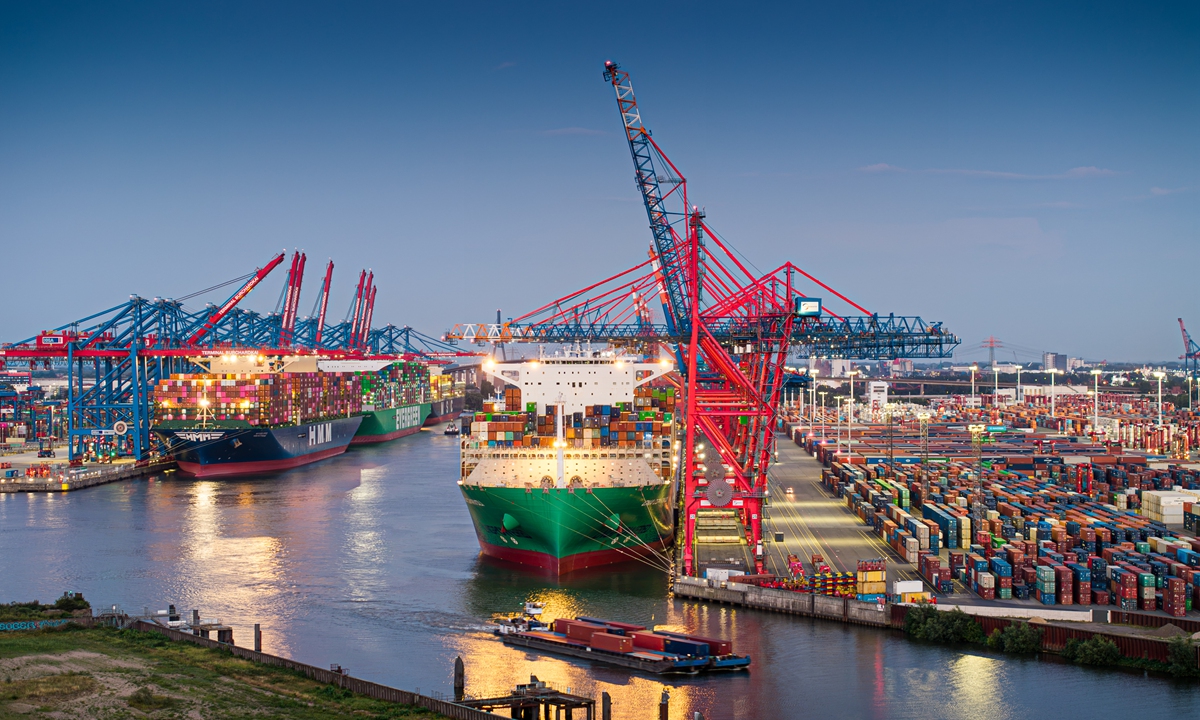
Container ships, gantry cranes and container yards are seen at the HHLA Container Terminal Burchardkai and the EUROGATE Container Terminal in Hamburg, Germany, on August 5, 2026. Photo: VCG
German exports to China fell year-on-year in the first half of 2026, pointing to a deeper restructuring of bilateral trade as China moves up the manufacturing value chain, Chinese analysts said. They also cautioned that the decline should not be read as diminishing China's importance to German businesses, given the deep economic ties and the continued benefits of cooperation for both sides.
Germany's first-half exports to China fell by more than 12 percent year-on-year to just under 37 billion euros ($43 billion), while imports from China rose 8.9 percent to 91.8 billion euros, according to data from Germany Trade & Invest (GTAI) cited by Reuters on Sunday. Germany's trade deficit with China widened to about 55 billion euros from 40 billion euros a year earlier, the report said.
Reuters cited Corinne Abele, GTAI's East Asia expert, as pointing to weaker domestic demand and the fact that German companies are increasingly producing inside China.
Commerzbank economist Vincent Stamer said that China's diminishing reliance on Germany showed that the country is becoming more independent of Western powers and catching up technologically, according to Reuters.
China has continued to strengthen its capabilities in sectors including new-energy vehicles, artificial intelligence and advanced manufacturing, enabling more products and technologies that previously depended on imports to be supplied domestically, Zhao Junjie, a senior research fellow at the Institute of European Studies at the Chinese Academy of Social Sciences, told the Global Times on Sunday.
"This means the structure of China-Germany trade is changing," Zhao said, noting that as Chinese industries move up the value chain, China's reliance on some German industrial products is declining, while Chinese companies are becoming more competitive in sectors where German manufacturers traditionally enjoyed strong advantages.
In a position paper released on July 28, China's Ministry of Commerce (MOFCOM) said that the rapid growth of China's modern industries is driven by innovation, with nationwide research and development (R&D) spending growing by an average of 10 percent annually during the 14th Five-Year Plan (2021-25) period.
The changing trade trend is also linked to Germany's own industrial competitiveness and policy environment, Zhao said, noting that high energy costs, demographic pressures and slower investment in some emerging technologies have weighed on the country's industrial upgrading and innovation.
At the same time, political and security considerations have increasingly shaped Germany's economic policy toward China, as Berlin has moved closer to the broader US and EU "de-risking" agenda, Zhao said.
"Such policies can be a double-edged sword, raising costs for German companies in China and disrupting bilateral economic cooperation while seeking to pressure Chinese industries."
However, it is notable that overall China-Germany trade remained substantial. Total bilateral trade exceeded 128 billion euros in the first half, about 3 billion euros more than Germany's trade with the US, according to Reuters.
China overtook the US as Germany's top trading partner in 2025 after US President Donald Trump launched sweeping protectionist tariffs that weighed on German exports to the US.
Falling German exports should not be seen as diminishing China's importance to German businesses, especially as bilateral ties are increasingly expanding beyond trade into investment, local production and R&D, analysts said.
German companies invested more than 7 billion euros in China in the first 11 months of 2025, up 55.5 percent from 4.5 billion euros in 2024 and 2023 and hitting a four-year high. German companies are bulking up their China business and adopting "China for China" production strategies partly to reduce exposure to possible tariffs and export restrictions, according to Reuters.
Major German companies are also deepening their presence in China. BASF's Verbund site in Zhanjiang, South China's Guangdong Province went fully operational in March with an investment of 8.7 billion euros, the largest single investment project wholly owned by a German enterprise in China, the Xinhua News Agency reported.
"China and Germany have developed deeply intertwined economic interests over many years," Zhao said. Rather than treating stronger Chinese industries as a reason to reduce cooperation, Germany should adapt to a relationship in which competition increasingly coexists with investment, innovation and industrial collaboration, he noted.
Recent high-level exchanges have also underscored the importance both sides attach to economic ties. During a meeting with German Economy Minister Katherina Reiche in May, Chinese Vice Premier He Lifeng said that China and Germany are important economic and trade partners with a solid foundation, enormous potential and strong complementarity, calling on both sides to consolidate cooperation in traditional sectors and tap opportunities in emerging fields, according to the Xinhua News Agency.
Reiche said that the German business community remained confident about China's economic prospects and innovation capabilities and would continue to deepen cooperation, Xinhua reported.
The two sides have also moved to strengthen institutional mechanisms. China and Germany agreed to restart the China-Germany Joint Economic Committee and establish two new working groups on trade and investment and industrial cooperation, according to the MOFCOM.
。
Current article:http://www.yuejinhuapennuochoudengying.cyou/d50j/46s.xlsx
Published on:10:17:22