西西里的美丽传说
FTC proposes new rule to ban junk fees, potentially saving consumers 'tens of billions'_我的网站

A | The Federal Trade Commission is proposing a new rule that seeks to eliminate junk fees -- those hidden costs that can unexpectedly push up prices consumers pay at checkout.The proposed rule would apply to many industries across the economy, including event tickets, hotels and apartment rentals. If the rule goes into effect, companies that continue to charge these fees could be fined and forced to pay back consumers.The FTC says the far-reaching rule could save consumers “tens of billions of dollars in fees.”“The proposed rule would prohibit corporations from running up the bills with hidden and bogus fees, requiring honest pricing and spurring firms to compete on honesty rather than deception,” FTC Chair Lina Khan said on a call with reporters.The FTC estimates the proposed rule will save consumers more than 50 million hours per year of wasted time spent searching for the total price in live ticketing and short-term lodging alone. This time savings is equivalent to more than $10 billion over the next decade.There will be a 60-day public comment period once the rule is published in the Federal Register.Senior administration officials, however, did not have guidance on when the rule could be finalized and go into effect.The FTC has the authority to move forward with this rule without additional approval from Congress, officials said.As President Biden continues his push of “Bidenomics” and focuses on the everyday costs that hit American pocketbooks, this is another chance for the president to try to appeal to voters about his economic message. He’s repeatedly highlighted his administration's efforts to tackle these junk fees across a number of sectors -- from air travel to health care.Separately, the Consumer Financial Protection Bureau is issuing guidance to large banks and credit unions, prohibiting them from charging customers fees for basic information about their accounts, like checking their bank account balance.The CFPB also released a new report showing its crackdown on bounced check fees has saved consumers nearly $2 billion since 2021.。

Zhang Zhiheng (C, front), the one hundred millionth visitor of Shanghai Science and Technology Museum, walks with his parents and museum director Ni Minjing (1st L, front) for a themed event at the museum in Shanghai, east China, Aug. 18, 2026. The number of visits to Shanghai Science and Technology Museum exceeded 100 million on Tuesday since its opening in 2001. It is a comprehensive science and technology museum complex that integrates a science and technology museum, a natural history museum, and a planetarium. (Xinhua/Fang Zhe)The Shanghai Science and Technology Museum welcomed its 100 millionth visitor on Tuesday, as a growing number of travelers are looking to make science and technology a part of their holidays.
Zhang Zhiheng, a boy from east China's Shandong Province, was the landmark visitor. He visited the museum with his parents on the second day of his first trip to Shanghai.
Since opening its doors to the public in late 2001, the museum has grown into one of China's most popular science and education destinations. Through a wide range of science and technology activities and programs, it remains dedicated to boosting public scientific literacy and sparking curiosity in visitors of all ages.
After being closed for over two years for upgrading, the museum reopened early this year. It now also includes two branches: the Shanghai Natural History Museum and the Shanghai Astronomy Museum.
Back in 2001, the proportion of Chinese citizens with scientific literacy was only 1.4 percent, and the figure had risen to 16.74 percent by 2025, according to official data.
As public interest in science has grown, visits to science and technology museums have increasingly become part of everyday life.
For many families, museums have become a popular destination during holidays and weekends, offering children opportunities to expand their knowledge and broaden their horizons.
"The biggest change I feel during my museum visits is that science and technology keep advancing," said Zheng Qina, a post‑90s visitor from Shanghai. She was nine years old when she visited the museum in 2001. Today, her five‑year‑old son is also a regular visitor.
The trend is also extending to international travelers. With China's inbound tourism gaining momentum following eased visa policies, science museums have emerged as an increasingly popular destination for overseas visitors seeking a closer look at the country's technological development.
From January to July this year, the Shanghai Science and Technology Museum and its two branches received nearly 200,000 foreign visitors, accounting for nearly 5 percent of the total visitor numbers.
Francisco and his parents, a family from Italy, were among the visitors on Tuesday. After touring an exhibition on green energy, Francisco said he was deeply impressed by displays showcasing China's nuclear and hydrogen energy technologies.
In recent years, China has made major advances in fields ranging from artificial intelligence and humanoid robots to quantum science, green energy, space technology, life sciences and physical sciences. Science and technology museums offer visitors an opportunity to explore some of these developments through exhibitions and interactive experiences.
For Ni Minjing, director of the Shanghai Science and Technology Museum, a notable change among visitors is that they have shifted from passive recipients of knowledge to more active explorers of science.
"Teenagers in particular now have abundant channels to acquire knowledge. The role of science and technology museums can no longer be merely about resolving doubts," Ni said. "Instead, through diverse forms of science popularization, museums should inspire visitors, especially young people, to think and create."
"We will continue to innovate the way we popularize science, enrich science-related content, promote the spirit of scientists and foster a culture of innovation, so as to spark young people's curiosity, imagination and desire to explore," Ni added.
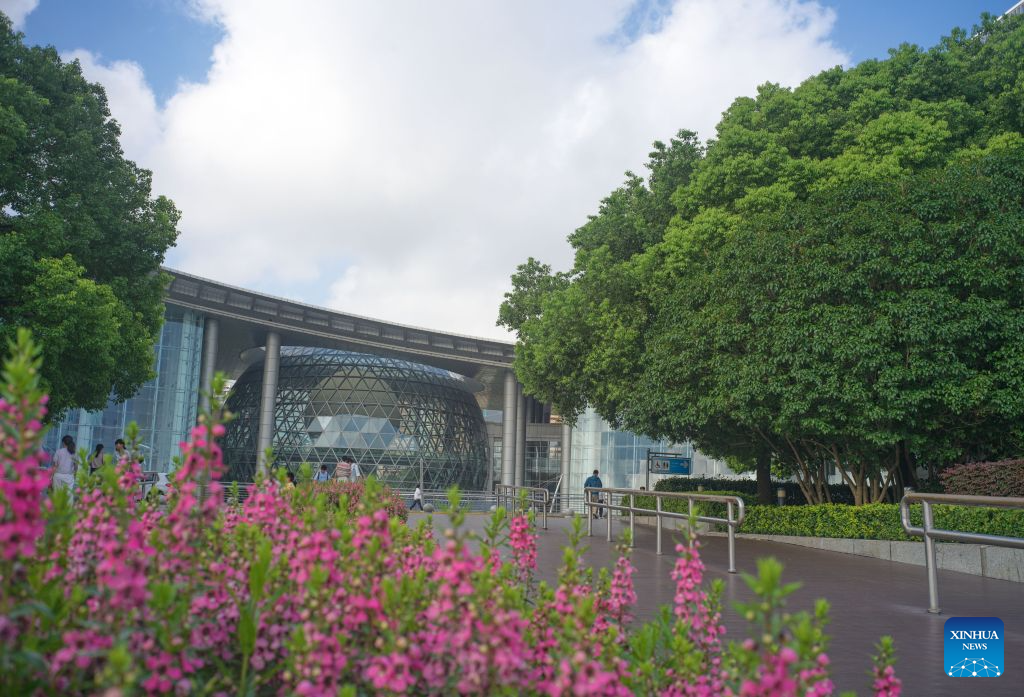
This photo taken on Aug. 18, 2026 shows an exterior view of Shanghai Science and Technology Museum in Shanghai, east China. The number of visits to Shanghai Science and Technology Museum exceeded 100 million on Tuesday since its opening in 2001. It is a comprehensive science and technology museum complex that integrates a science and technology museum, a natural history museum, and a planetarium. (Xinhua/Fang Zhe)
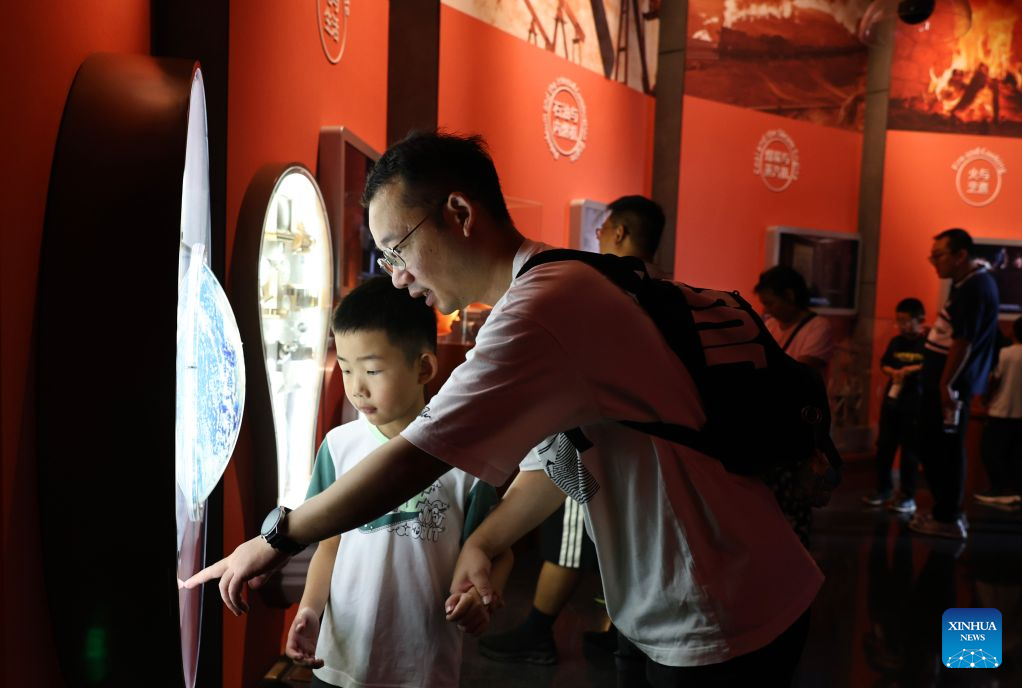
People visit the Shanghai Science and Technology Museum in Shanghai, east China, Aug. 18, 2026. The number of visits to Shanghai Science and Technology Museum exceeded 100 million on Tuesday since its opening in 2001. It is a comprehensive science and technology museum complex that integrates a science and technology museum, a natural history museum, and a planetarium. (Xinhua/Fang Zhe)
。
Current article:http://www.yuejinhuapennuochoudengying.cyou/83cus37/20260826/2337369.htm
Published on:21:52:46


